How Mechanical Installation Sets the Pace on Utility-Scale Solar Projects
On a utility-scale solar project, mechanical installation is the pace-setting scope. Every other trade follows it. Electrical crews cannot begin DC wiring until mechanical has opened zones for them. Commissioning cannot begin until electrical is complete. If mechanical falls behind, the delay does not stay within the mechanical scope. It cascades forward into the entire project schedule and ultimately into the commissioning date.
Understanding what mechanical installation actually involves, what separates crews that maintain consistent production from those that fall behind, and what EPCs should look for when evaluating a mechanical subcontractor is essential to project planning and subcontractor selection on any large solar build.
What Utility-Scale Mechanical Installation Covers
Pile Driving and Foundation Installation
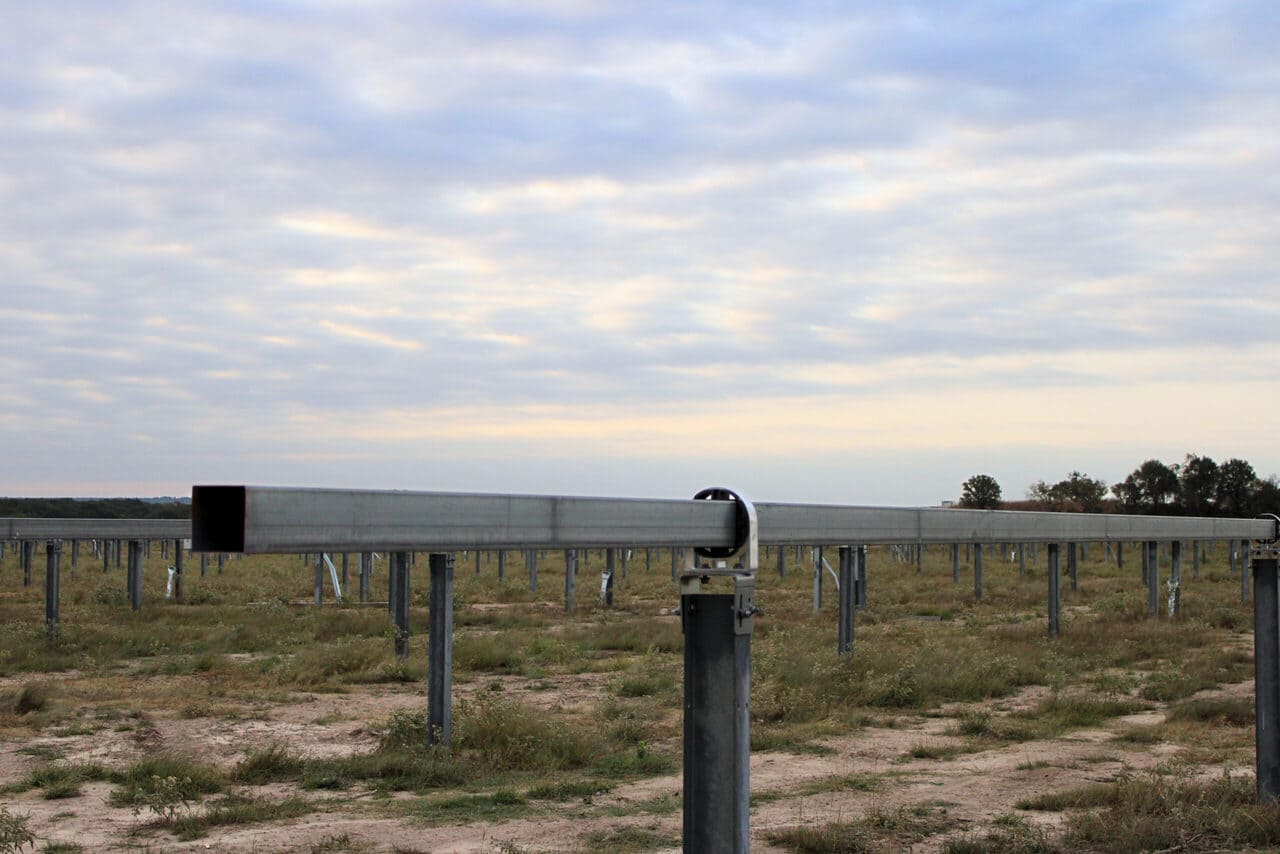
The mechanical scope on a ground-mount solar project begins with pile driving, the installation of the steel piles that anchor the racking system to the ground. Pile type, embedment depth, and plumb tolerance are all specified by the structural engineer of record and must be met consistently across every pile on the site. A site with 50,000 piles cannot afford a significant deviation from spec, because out-of-spec piles create tracker alignment problems that affect energy production for the life of the project.
Pile driving production rates are the primary driver of the mechanical schedule. A crew that consistently hits its daily pile count keeps the electrical trades on schedule. A crew that falls behind in the first two weeks of mechanical rarely recovers. Power Ray tracks pile counts daily and identifies pace issues before they become schedule problems.
Racking and Structural Assembly
Once piles are installed, the racking system, the steel framework that supports the solar modules, is assembled according to the manufacturer's specifications and the project's structural drawings. This phase involves significant labor coordination across a large site, with multiple crews working in parallel across different zones. Quality control during racking assembly directly affects module installation efficiency and tracker performance.
Tracker Installation
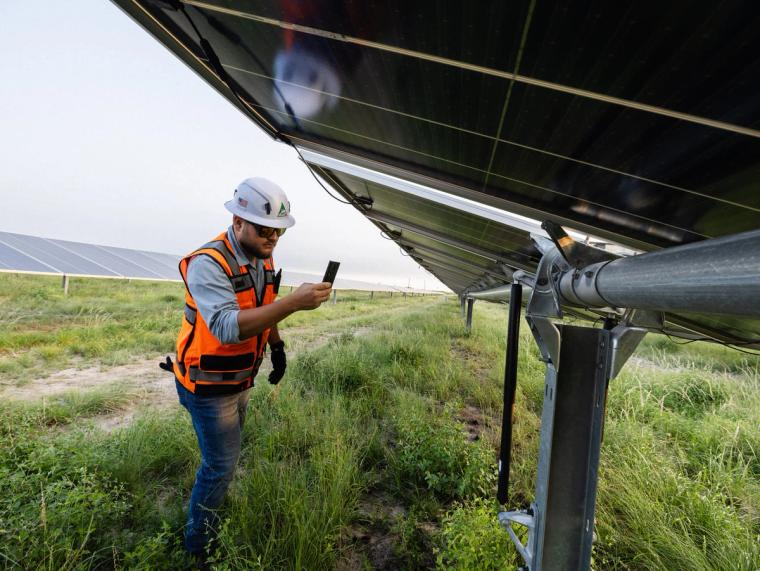
Single-axis trackers, which rotate the array to follow the sun throughout the day, are a feature of most utility-scale projects today because of their impact on energy yield. Tracker installation requires careful alignment and precise torque specifications at connections throughout the system. Errors in tracker installation lead to alignment issues and mechanical failures that are expensive to diagnose and correct after the modules are installed.
Inverter Setting and Module Installation
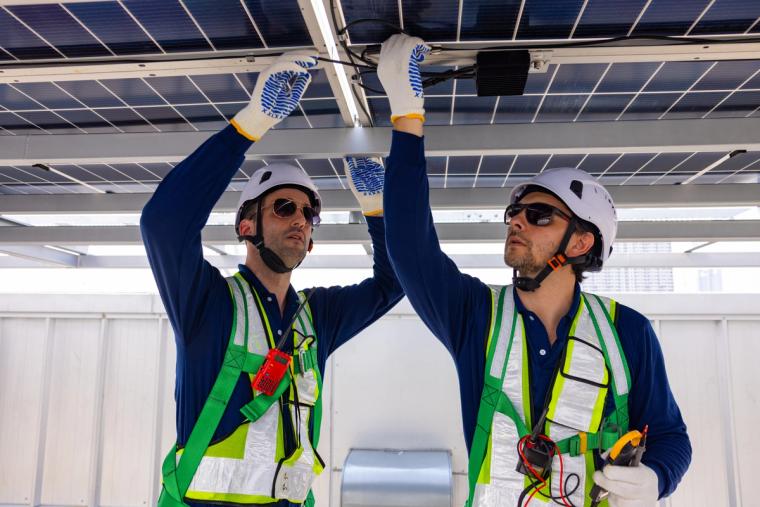
String inverters or central inverters are set and anchored during the mechanical phase before the electrical team begins terminations. Module installation is the final mechanical task: each panel is placed, positioned, and secured to the racking in accordance with the electrical design. Module installation production is measured in strings and zones per day, and consistent production in this phase is what allows electrical to begin commissioning on schedule.
What Separates High-Performing Mechanical Crews
Full Staffing From Day One
Mechanical production on a large solar site depends on having the right number of workers in the right positions from the first day. Crews that start understaffed and plan to add workers as the project ramps up consistently fall behind in the critical early weeks when the schedule is most vulnerable. Power Ray shows up to every project fully staffed to meet the production targets in the schedule, not to ramp up to them.
Experienced Foremen and Field Leadership
Production at a solar site is managed at the zone level by experienced foremen who know their crew's daily targets, track progress throughout the day, and escalate early when they fall behind. This requires field leadership that has done this work before, not supervisors who are learning the job on a large commercial project. Power Ray's foremen are company employees with experience on comparable projects.
Quality Control That Does Not Slow Production
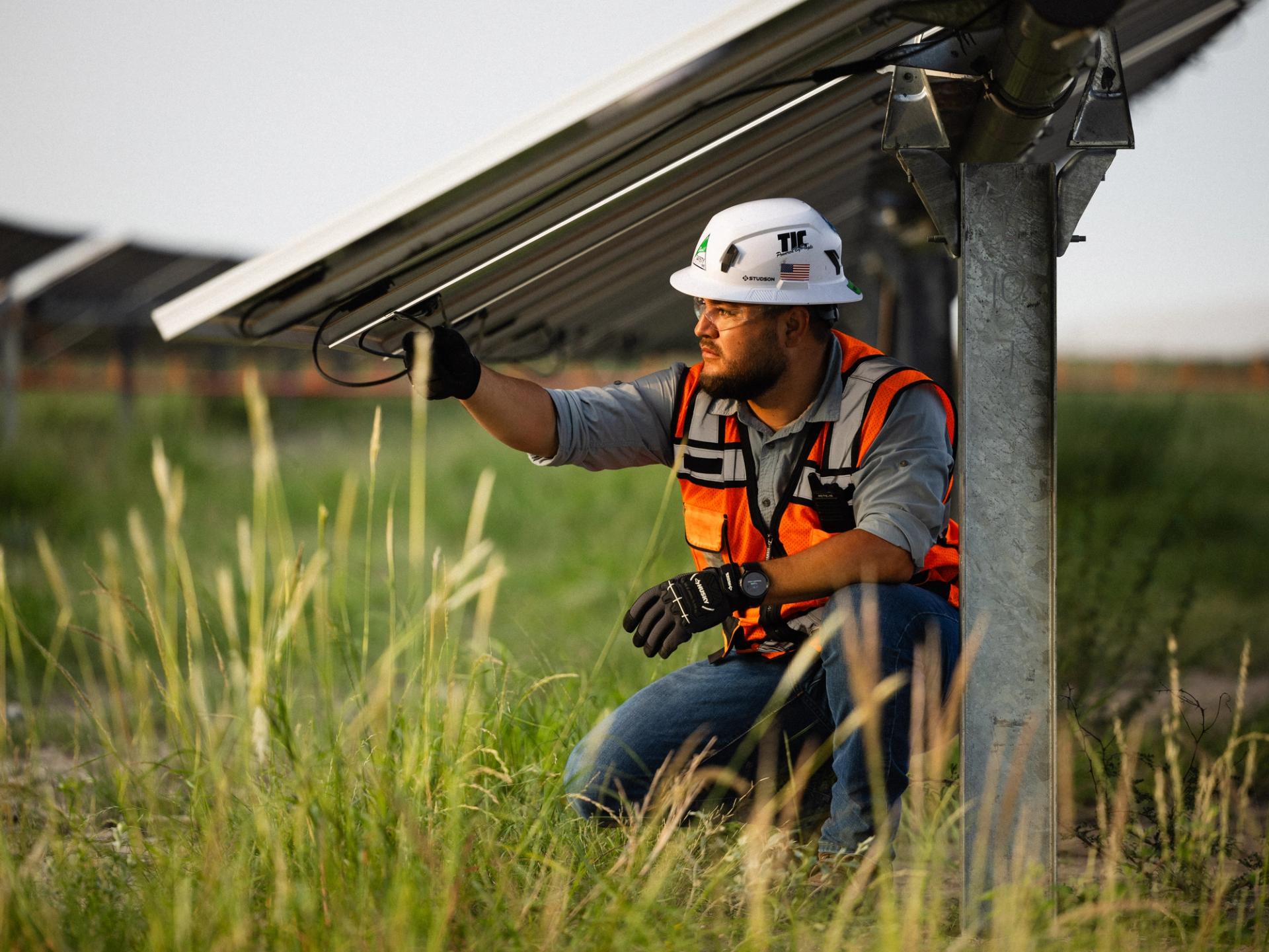
High production and high quality are not in conflict when processes are designed correctly. Experienced mechanical crews build quality verification into the workflow rather than treating it as a separate step that competes with production. Pile plumb checks, torque verification during racking assembly, and tracker alignment confirmation during installation all happen as part of the normal production rhythm.
How Power Ray Approaches Mechanical Installation
Power Ray is a self-performing solar construction company with mechanical and electrical capabilities. Our mechanical crews are company employees trained to Power Ray's production standards and safety protocols. We have driven piles on projects from 1 MW to more than 200 MW across 26 states and have the field management infrastructure to sustain consistent production at scale.
Our EMR of 0.85 reflects how we manage safety at the field level, which is the same discipline that drives production consistency. Recognized as a Top 30 U.S. Solar Contractor in both 2024 and 2025, Power Ray brings the track record and the self-performing capability that EPCs need in a mechanical subcontractor on projects where schedule is everything.
Request a bid or contact our team directly to discuss your upcoming project. We are ready to move when you are.